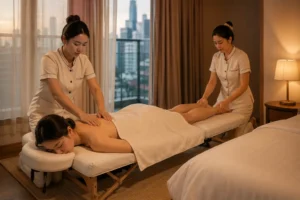
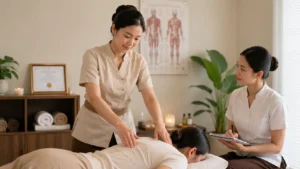
Thai massage is done fully clothed and uses stretching and rhythmic pressure to open up the body and boost energy. Swedish massage, offered here as a relaxing oil massage, uses gentle, flowing strokes to calm the whole system. Deep tissue uses slow, firm pressure to release stubborn, chronic tension. The best one for you comes down to a single question: do you want to feel loosened, relaxed, or worked on.
All three are safe, professional treatments, and none is better than the others in general. They simply do different jobs. This guide explains what each one is, how they differ in pressure and feel, and how to pick the right style for your body and your day.
- Choose Thai massage for flexibility, stiffness, and an energising, stretch-based session.
- Choose Swedish, or oil massage, for pure relaxation and stress relief with light to medium pressure.
- Choose deep tissue for chronic knots, a tight back, or muscles sore from training or desk work.
- Not sure? Tell your therapist your goal and they will guide you, or blend styles to suit you.

- Thai massageClothed, stretching
- Swedish / oilGentle, relaxing
- Deep tissueFirm, therapeutic
- In BangkokAll available as outcall
What is Thai massage?
Thai massage is the traditional bodywork of Thailand, and it feels different from anything oil based. You stay fully clothed in loose, comfortable clothing, and no oil is used. Working on a firm mat, the therapist uses their hands, thumbs, forearms, and sometimes feet to apply pressure along the body's energy lines, then guides you through a series of assisted stretches. People often describe it as being gently folded and lengthened, a bit like yoga done for you.
Because it combines pressure with movement, Thai massage is the best pick for flexibility, stiffness, and a feeling of lightness and energy afterwards, rather than sleepiness. If you want the full background on the tradition, our guide to traditional Thai massage in Bangkok covers what a session involves.
What is Swedish massage?
Swedish massage is the classic Western relaxation massage, and it is the style most people picture when they think of a spa. It is worked on bare skin with oil, using long, gliding strokes, kneading, and light rhythmic movements that calm the nervous system and ease everyday tension. The pressure is usually light to medium, and the goal is comfort and calm rather than intense work.
At Divine we offer this as our relaxing oil massage in Bangkok, which uses the same gentle, flowing Swedish technique. It is the natural choice after a long flight, a stressful week, or a day in the sun, when you simply want to switch off and unwind.
What is deep tissue massage?
Deep tissue massage uses the same oil-based setting as Swedish, but the intent is different. The therapist works more slowly and with firmer, more focused pressure to reach the deeper layers of muscle and release chronic tension, knots, and adhesions. It is not about being rough, it is about patient, targeted work on the areas that need it, often the neck, shoulders, and lower back.
This is the style to choose for long-standing tightness, muscle soreness from training, or the stiff shoulders that come with desk work. If you are weighing it up, our post on whether deep tissue is right for you goes deeper, and you can book it directly as a deep tissue massage in Bangkok.
The main differences at a glance
The quickest way to tell them apart is by three things: whether oil is used, how much pressure is applied, and how you feel afterwards.
Thai
- Fully clothed, no oil
- Pressure plus stretching
- On a mat
- Leaves you energised and loose
Swedish / oil
- Oil on bare skin
- Light to medium pressure
- Long, flowing strokes
- Leaves you calm and relaxed
Deep tissue
- Oil on bare skin
- Slow, firm pressure
- Focused on problem areas
- Leaves you released, maybe tender
Which one is right for you
Match the style to what your body is asking for. The list below covers the goals people book for most often.
- To relax and de-stress: Swedish, or oil massage. Gentle and soothing from start to finish.
- To improve flexibility and feel energised: Thai massage, for its stretches and movement.
- To fix a tight, sore, or knotted area: deep tissue, for its focused, firmer pressure.
- To recover after travel or long days walking: Thai for stiffness, oil for tired, aching legs.
- For a first-ever massage: Swedish or oil is the easiest and most comfortable place to start.
This is a three-way choice, which is different from the more common two-way decision between clothed and oil work. If that is really your question, our guide to Thai massage vs oil massage compares those two head to head.

Pressure and what to expect
Pressure is the point where people worry, so it helps to know what is normal. Swedish stays light to medium and should feel pleasant throughout. Thai can feel firm during the stretches and pressure points, but never sharp. Deep tissue is the firmest of the three, and a good session works right at the edge of comfort without crossing into real pain. A little tenderness the next day after deep tissue is normal and passes quickly.
Good pressure is firm enough to do the work, but never so hard that you tense up against it. If it hurts, say so, and a professional will ease off at once.
How to judge massage pressure
Whatever the style, pressure should always be a conversation. Speak up for more or less at any point, and the therapist will adjust. That is true across every style we bring to your room.
Can you combine them?
Yes, and many people do. A common request is a mostly relaxing oil massage with some firmer, deep tissue work on the shoulders and back where the tension sits. Others enjoy a Thai session for the stretches, then finish with oil work on the legs. Because our therapists are trained across all these styles, you do not have to choose a single label. Tell them how you feel and what you want out of the hour, and they will shape the session to fit.
Drink water afterwards and take it easy, especially after deep tissue. Feeling relaxed or a little sleepy is normal. Anything sharp or lasting is not, so mention it to your therapist or a doctor if it happens.
Booking in Bangkok
You do not have to decide everything before you book. Whether you want the stretch of Thai, the calm of an oil massage, or the focused work of deep tissue, our trained therapists bring the full setup to your hotel or condo and tailor the session to you. When you are ready, our team offers massage in Bangkok delivered to your door.
book a sessionFrequently asked questions
What is the difference between Thai, Swedish, and deep tissue massage?
Thai massage is done clothed and uses stretching with pressure to improve flexibility and energy. Swedish, offered as an oil massage, uses gentle flowing strokes for relaxation. Deep tissue uses slow, firm pressure on bare skin to release chronic muscle tension. The difference comes down to oil, pressure, and whether the goal is loosening, relaxing, or targeted work.
Which massage is best for relaxation?
Swedish massage, offered here as a relaxing oil massage, is the best choice for pure relaxation. Its light to medium pressure and long, flowing strokes calm the nervous system, making it ideal after travel, stress, or a long day.
Which massage is best for chronic pain or tight muscles?
Deep tissue massage is the best pick for chronic tightness, knots, or muscles sore from training or desk work. It uses slower, firmer, more focused pressure to reach the deeper muscle layers. Tell your therapist exactly where it hurts so they can work that area.
Is Thai massage better than Swedish massage?
Neither is better, they do different jobs. Thai massage is clothed, uses stretching, and leaves you energised and flexible. Swedish is an oil massage that leaves you calm and relaxed. Choose Thai for stiffness and mobility, and Swedish for stress relief and comfort.
Which massage should a first-timer choose?
A Swedish or oil massage is the easiest first massage, since the pressure is gentle and the experience is soothing. If you prefer to stay clothed and enjoy stretching, Thai massage is also a comfortable start. You can always ask the therapist to keep the pressure light.