A massage contraindication is a health condition or situation where getting a massage could do more harm than good, so the session should be adjusted, postponed, or skipped. Massage is a safe, gentle therapy for most people, but a short list of conditions are the exception, and knowing them keeps a relaxing treatment from becoming a problem.
This guide is general information, not medical advice. It walks through when you should not get a massage, when you should check with a doctor first, the areas a therapist works around rather than on, and the one simple habit that keeps every session safe.
- Skip a massage if you have a fever, a contagious illness, or a suspected blood clot.
- Check with your doctor first if you are pregnant, or have cancer, a heart condition, osteoporosis, or a bleeding disorder.
- Therapists work around, not on, bruises, open skin, sunburn, and fresh tattoos.
- The golden rule: tell your therapist about your health before the session starts.
- Safe for most peopleYes
- Serious side effectsRare
- When in doubtAsk your doctor
- Every timeTell your therapist
What a contraindication means
Contraindication is a word borrowed from medicine. It simply means a reason not to do something, or a reason to do it differently. In massage, contraindications fall into three groups, and the difference matters. A full contraindication means no massage at all for now. A local contraindication means the therapist avoids one area of the body but can still treat the rest. And some conditions are neither, they just call for a doctor's go-ahead and a gentler approach.
None of this is meant to worry you. The point of knowing the list is the opposite, it lets you relax and enjoy the session knowing nothing on it applies to you, or it flags the one thing worth a quick word with your therapist or doctor first.
Is massage safe?
For the great majority of people, yes. A safety review of massage therapy published in the journal Rheumatology concluded that serious adverse events are probably true rarities, and the few cases on record were mostly linked to forceful or unusual techniques, or to people without proper training, rather than to standard massage by a qualified therapist. In other words, the risk from a normal, professional session is very low.
"Massage is not entirely risk free. However, serious adverse events are probably true rarities."
Safety review, Rheumatology (Oxford)
That is exactly why the short list below matters. The rare problems tend to happen when a genuine contraindication is missed, so a good therapist checks for them, and a good client mentions them. Choosing trained massage therapists in Bangkok rather than untrained hands is the single biggest safety step you can take.
When you should not get a massage
These are the situations where it is best to postpone the session entirely, not just adjust it. If any apply, wait until you have recovered or spoken to a doctor.
- A fever, the flu, or any contagious infection. Massage can make you feel worse and spreads illness to the therapist.
- A suspected or diagnosed blood clot, such as deep vein thrombosis. Pressure on a clot can be dangerous, so this needs a doctor, not a massage.
- A contagious skin condition or an active rash over a wide area.
- Recent surgery or a fresh injury that has not been cleared for touch by your doctor.
- Been drinking heavily. Alcohol and massage do not mix, and you cannot judge pressure clearly.
The blood clot point is the one worth taking most seriously. It is uncommon, but it is the reason a professional will ask about swelling, pain, or redness in the legs before working there.
When to check with a doctor first
These conditions do not always rule out a massage, but they call for a doctor's approval and a therapist who will adapt the pressure and technique. When you book, mention the condition so the session can be planned around it.
Get medical clearance
- Pregnancy, especially the first trimester or a high-risk pregnancy
- Cancer or ongoing cancer treatment
- Heart conditions or uncontrolled high blood pressure
- Bleeding disorders or blood-thinning medication
Ask for a gentler approach
- Osteoporosis or fragile bones
- Diabetes with reduced sensation or circulation
- Recent or healing fractures nearby
- Varicose veins (worked around, with light pressure only)
For most of these, a massage can still be a comfort when it is done carefully. The theme is simple: lighter pressure, the right positioning, and a therapist who knows what to avoid. If you are booking for an older relative or someone with a health condition, our guide on getting ready for your therapist covers what to have ready.

Areas a therapist works around, not on
A local contraindication means only one spot is off limits while the rest of the body is fine to treat. A skilled therapist simply routes around these areas. Point them out at the start so nothing is missed.
- Bruises, swelling, and inflamed or painful areas
- Open wounds, cuts, burns, and blisters
- Sunburn, a real one in a beach city, so mention it
- Fresh tattoos or recent piercings until fully healed
- Varicose veins, moles that have changed, and any undiagnosed lump
Sunburn deserves a special mention for visitors. After a day at the beach, oil and pressure on burned skin is painful and unhelpful, so a therapist will keep to the unburned areas or suggest waiting a day.
Things that can simply wait
Not everything on the caution list is medical. A few everyday situations just make for a poor session, so they are worth timing around. A very full stomach right after a heavy meal is uncomfortable face down, so leave an hour or so. If you are extremely tired, dehydrated, or unwell in a minor way, a massage can wait until you feel steadier. None of these are dangerous, they simply mean you will enjoy it more another time.
Feeling a little sore or sleepy the day after a firmer massage is normal and passes quickly. Drinking water and taking it easy afterwards helps. Anything sharp, spreading, or lasting is not normal, so contact a doctor if that happens.
The golden rule: tell your therapist
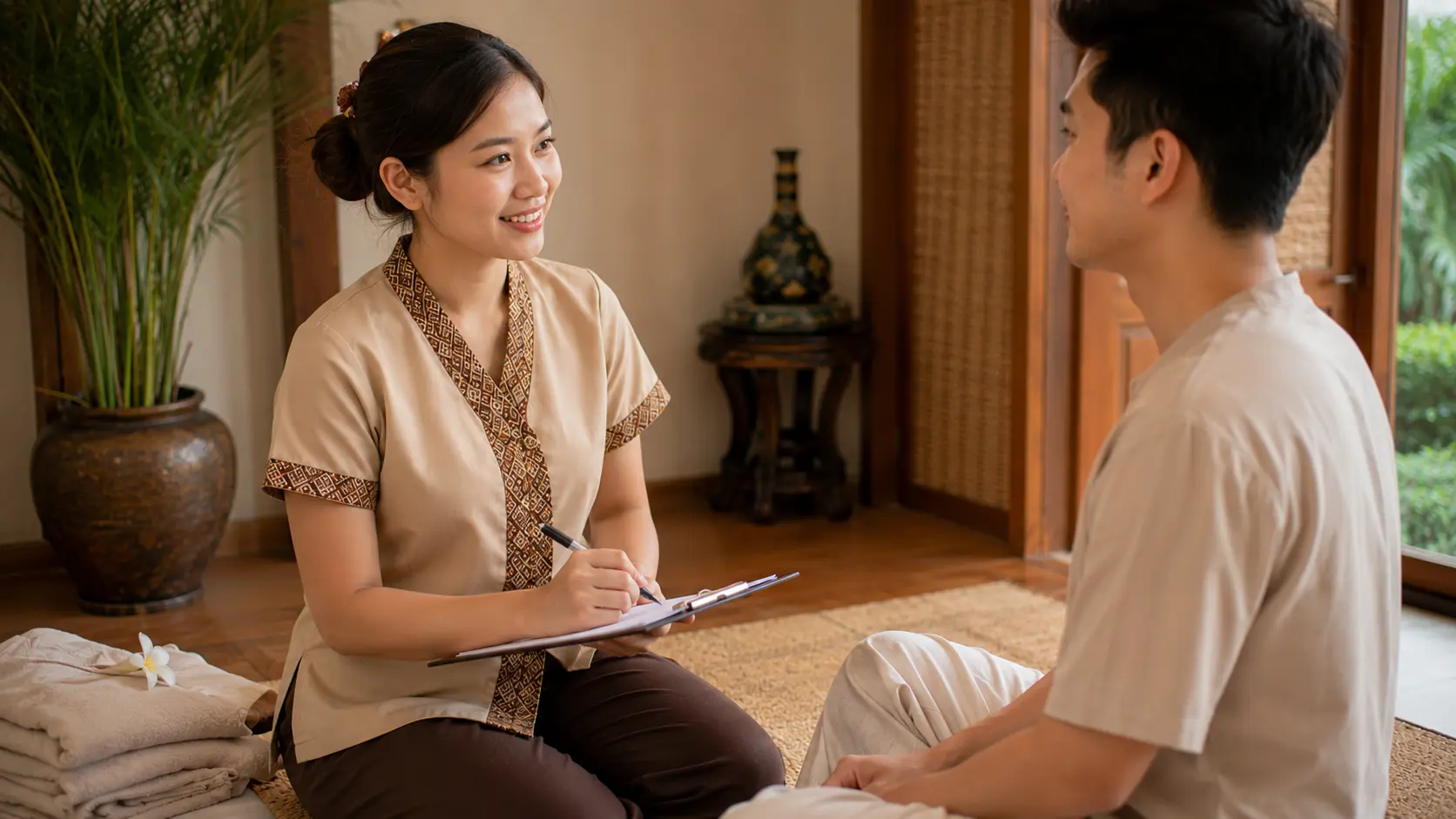
Almost every risk on this page disappears with one habit. Before the session begins, tell your therapist about your health, any conditions, any medication, any recent injury or surgery, and any area that is sore. This is routine and confidential, and it is exactly what a professional wants to hear. It lets them adjust the pressure, skip the wrong areas, and choose the right style for you.
A quality service builds this into the booking. When you arrange a session, a short health check is normal and welcome, not an inconvenience. If a provider never asks anything about your health, treat that as a sign of a less professional operation. Our FAQ covers more of what to expect from a proper booking.
Booking a massage with confidence
The safest massage is a professional one, with trained therapists who ask the right questions and adjust to your needs. If you are in the city and want a careful, professional session brought to your hotel or condo, Divine Thai Spa works only with vetted, experienced therapists. Share anything on this page when you book and the session will be planned around it. Ready when you are, our team offers massage in Bangkok delivered to your location.
book a sessionFrequently asked questions
Who should not get a massage?
Anyone with a fever, a contagious illness, or a suspected blood clot should postpone a massage. People who are pregnant or who have cancer, a heart condition, osteoporosis, or a bleeding disorder should get a doctor's approval first. For most other people, a professional massage is safe.
Is it safe to get a massage while pregnant?
Often yes, with care. Many pregnant women enjoy massage, but it calls for a therapist experienced in the right positioning and pressure, and a doctor's go-ahead first, especially in the first trimester or a high-risk pregnancy. Always mention the pregnancy when you book.
Can you get a massage with high blood pressure?
Usually, if it is controlled and your doctor agrees. Gentle, relaxing styles are preferred over very deep pressure. Tell your therapist about the condition and any medication so they can keep the session light and calming.
Should you get a massage when you are sick?
No. If you have a fever, the flu, or any contagious infection, postpone the session. Massage can make you feel worse while your body is fighting the illness, and it puts the therapist at risk. Wait until you have recovered.
What should I tell my massage therapist before a session?
Mention any health conditions, medication, recent injuries or surgery, allergies, pregnancy, and any area that is sore or sunburned. This short, confidential check lets the therapist adjust the pressure and technique so the massage is both safe and comfortable.