Back pain is almost a rite of passage, and a long trip has a way of bringing it on early. Around 80 percent of people deal with lower back pain at some point, and long flights, an unfamiliar bed, a heavy bag on one shoulder, and hours hunched over a phone all add up fast.
So it's no surprise that massage for back pain is one of the first things travellers go looking for once the ache sets in. The harder question is which kind actually helps, and which is just a pleasant hour that leaves the problem exactly where it was. This is a practical guide to that: what causes the pain, which massage works for which problem, what to tell the therapist, and when a massage is the wrong call and a doctor is the right one.
The best massage for back pain depends on the cause. Deep tissue suits chronic, long-standing tension; trigger point therapy targets a specific knot; traditional Thai massage helps when stiffness and limited movement are the main issue. A good therapist often blends them. One session gives real relief, but a chronic problem usually needs a short run of weekly sessions. If pain is severe, followed an injury, or radiates down a leg, see a doctor first.

Why lower back pain follows travellers around
Most travel back pain is mechanical. Nothing is torn and nothing is damaged; the muscles are simply overworked, tight, and stuck. Poor posture is usually the root of it. A day spent slouched on planes, trains, and low stools quietly shortens some muscles and overstretches others, and the lower back ends up carrying the strain. Office workers know the feeling well, and a holiday rarely fixes the pattern. It just changes the chair.
The pain itself tends to spread. Most people start hurting a few days into a trip, long before they connect it to the bag on one shoulder. A tight lower back pulls on the hips, stiff shoulders drag on the neck, and before long the whole body is compensating. What started as one stiff spot turns into a general ache that follows you from morning to night. This matters for treatment, because the place that hurts is often not the place that started it. A good therapist treats the root, not just the loudest symptom.
Which massage works best for back pain
Bangkok is known the world over for massage, but quality varies wildly, and back pain is where that gap shows most. There's no single answer, and anyone who promises one is selling something. The right pick depends on whether the issue is a stubborn knot, all-over tension, or something deeper. Here is how the main options differ.
| Style | How it works | Best for |
|---|---|---|
| Deep tissue | Slow, sustained pressure into the deeper muscle layers | Chronic, long-standing tension and pain |
| Traditional Thai | Compression and assisted stretching along the body's energy lines | Stiffness and limited movement, tight hips and upper back |
| Trigger point | Sustained pressure on one specific knot until it releases | Sharp pain that traces back to a single spot |
Deep tissue is the heavy hitter for chronic problems, reaching muscle fibres that lighter styles glide straight over. It's well regarded for long-standing tension: the slow, firm work improves circulation so more oxygen reaches tired tissue, and it calms the nervous system into deep relaxation. For many people that means genuine relief without reaching for painkillers every day, easing pain closer to the source instead of just masking it. You can read how Divine Thai Spa approaches its deep tissue massage for the full picture.
Traditional Thai massage takes a different route. Instead of oil and long strokes, it works along the body's energy lines with rhythmic compression and assisted, gentle stretching that opens up the hips and spine. That stretching is the part back pain sufferers tend to underrate, and it's a big reason Thai massage is so widely used for stiffness and limited movement. Thai massage in particular targets the shoulder blades and upper back, the exact zone that seizes up after a flight. If you're choosing between this and a softer option, our guide comparing Thai massage vs oil massage is a useful starting point.
Trigger point therapy is the targeted fix when pain is sharp and traces back to one spot. A trigger point is a tight knot that can refer pain elsewhere, which is why a knot near the shoulder blade can light up the neck or even the head. The therapist finds the point, then holds sustained pressure for roughly 30 to 90 seconds until it releases, restoring normal blood flow to the muscle. It's often combined with stretching and compression in the same session.

How massage compares to physical therapy
Physical therapy and massage are not rivals so much as different tools for different jobs.
| Physical therapy | Massage | |
|---|---|---|
| Typical session | About 30 minutes | About 60 to 90 minutes |
| Approach | Active exercises, homework between visits | Passive release, immediate relief |
| Builds | Strength and stability over time | Loosened muscle, eased nerve compression |
In studies, both produce meaningful pain reduction. The honest takeaway is that combining physiotherapy with targeted deep-tissue work tends to give the best results for chronic pain: massage loosens the muscles and eases nerve compression, while the exercises keep the gains from slipping away by the next week.
What back pain and tension headaches share
Plenty of people are surprised to learn their headaches start in their back. Tension headaches frequently begin as tightness in the neck and upper shoulders, then travel up to the base of the head. The muscle is doing the aching; the head just feels it. Easing the stiffness in the upper back and neck often takes the headache with it, which is a reason to mention head pain even when you booked for your spine.
What to tell your therapist in the first session
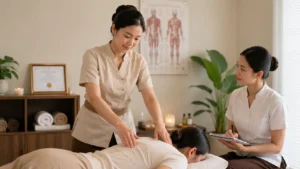
The first session sets the tone, and a couple of minutes of honesty at the start makes all the difference. Explain where you feel pain and, just as importantly, what it feels like. A dull, all-over ache, a sharp point, and pain that shoots down a leg are three very different things that call for different pressure and techniques.
Say how long it's been happening, whether any old injuries are involved, and how much pressure you actually want. There's no prize for suffering in silence, and if the pain is severe, recent, or radiating, say that too, because it changes the plan. Our experienced therapists in Bangkok are trained to read the body and adapt as they go, but they can only work with what you tell them.
One session or regular back pain treatment
A single massage can deliver real, immediate relief. Tight muscles let go, circulation improves, and you walk out moving more freely than you came in. The catch is that one session rarely fixes a problem that took months to build, so for anything chronic the relief is temporary unless the work continues.
For ongoing back pain, a short run of sessions does far more than a one-off. Booking weekly for the first few weeks lets each session build on the last before the muscles snap back to their old habits, and once the worst settles, most people stretch the gap out to maintenance every few weeks. Chronic back pain wears on mood, sleep, and overall quality of life, which is exactly why steady treatment beats waiting for the pain to force your hand.
Simple ways to support the treatment between sessions
Massage works better when the rest of the week cooperates.
- Keep moving. Gentle walking and a few basic exercises beat total rest, which is what got most people here in the first place.
- Mind the posture that started it. Raise the laptop, drop the shoulders, and stand up every hour or so.
- Use heat on a flare-up. Heat helps loosen tight muscles when things tighten up.
- Stay hydrated. Enough water keeps circulation moving.
- Rest properly. Give the body real rest at night so a good session doesn't unravel by the weekend.
When to see a doctor instead
Massage is excellent for muscular pain. It isn't the answer for everything, and knowing the difference protects you. See a doctor first if any of these apply:
- The pain is severe or came on suddenly after a fall or injury.
- Pain radiates down a leg with numbness or tingling.
- Pain comes with a fever.
- You have any loss of bladder or bowel control (this needs urgent medical care).
Acute or radiating pain should be properly evaluated before any massage, since the wrong pressure on the wrong problem can set you back. A reputable therapist will say the same and send you to a doctor when that's the right move. Anyone who promises to fix a serious back injury with pressure alone is not someone to trust with your spine. For everyday muscular tension and stiffness, though, massage remains one of the most effective and pleasant tools Thailand has to offer.

Booking in-room back pain treatment in Bangkok
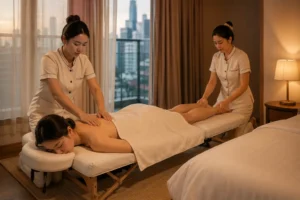
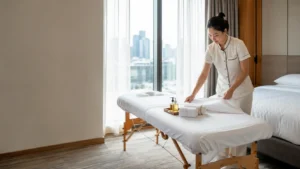
The last thing a sore back needs is a long taxi ride across the city, then a second one home while everything tightens up again. In-room treatment solves that: the therapist comes to the hotel or condo, sets up a calm space, and you go from the session straight to rest without undoing the work in traffic.
Divine Thai Spa runs a mobile massage service across central Bangkok, with deep tissue, Thai, and targeted back work all available, reaching the main hotel and residential service areas of the city.
Frequently asked questions
Which massage is best for back pain?
It depends on the cause. Deep tissue suits chronic, long-standing pain, trigger point therapy targets a specific knot, and traditional Thai massage helps when tightness and limited motion are the main issue. A good therapist often blends them based on what they find.
Does massage for back pain hurt?
It can feel intense, especially deep tissue or trigger point work on a tight spot, but it should never be unbearable. The rule is simple: firm and releasing is fine, sharp and breath-holding is too much. Tell the therapist and they'll ease off.
How many sessions do I need?
One session gives immediate relief, but chronic back pain usually needs a short run, often weekly for the first few weeks, then spaced out for maintenance. How fast you progress depends on how long the problem has been building.
Can I get a back massage at my hotel?
Yes. Outcall and in-room services bring an experienced therapist to hotels and condos across central Bangkok, with the equipment included, so there's no stiff journey home afterwards.
When should I see a doctor instead of booking a massage?
If the pain is severe, followed an injury, or radiates down a leg with numbness, get it checked by a doctor or physiotherapist before any massage. The same goes for back pain with fever or any loss of bladder or bowel control.
Ready to ease your back?
Targeted back pain treatment delivered to your hotel or condo in Bangkok. Deep tissue, Thai, and trigger point work from trained therapists, all equipment included. No traffic, no waiting room, just relief.
Book a back massage