If you're visiting Bangkok and thinking about your first Thai massage, you probably have questions, lots of them. This FAQ answers the most common ones honestly, from what to wear and how much pressure is normal, to exactly what happens during an outcall session at your hotel or condo.
Thai massage is one of the world's most popular wellness experiences, and Bangkok is where it originated. But as a first-timer, the options can feel overwhelming: walk-in shops, hotel spas, outcall services, each works a little differently. Whether you're staying in Sukhumvit, Silom, Sathorn, or by the river, here's what to expect from a professional session, with clear answers from people who do this every day.
A professional Thai massage is therapeutic and clothed, done on a mat with stretching and pressure (oil styles use draping instead). Sessions run 60 to 120 minutes, you stay in control of pressure and comfort throughout, and a reputable outcall service brings everything to your room. The most important thing is booking through a legitimate provider with clear pricing and real reviews.
What to expect
1. What exactly is Thai massage?
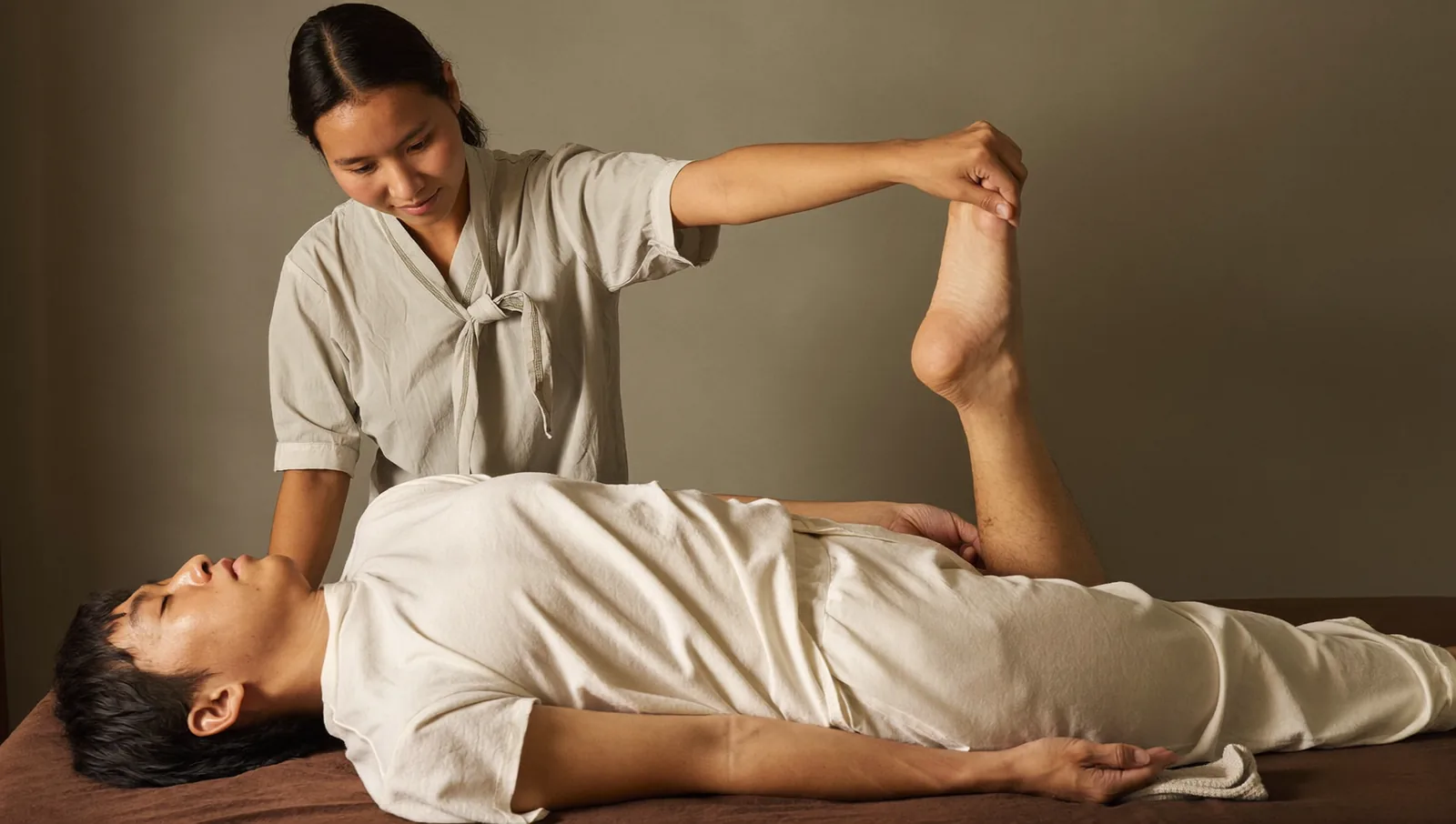
Thai massage is a traditional healing practice that combines acupressure, stretching, and assisted yoga postures. Unlike Western massage where you lie still, it involves movement: the therapist uses their hands, elbows, knees, and feet to apply pressure along energy lines while guiding your body through stretches. It's performed on a floor mat or table, typically without oil, and you stay clothed in loose garments.
2. Does Thai massage hurt?
It can feel intense, but it shouldn't cause sharp pain. The deep pressure and stretching might feel uncomfortable in tight areas, so communicate with your therapist and they'll adjust to your feedback. Some muscle soreness the next day is normal, similar to after a good workout.
3. What should I wear during a Thai massage?
For traditional Thai massage (no oil), wear loose, comfortable clothing, think soft trousers and a t-shirt. Many outcall therapists bring fresh garments for you to change into. For oil massage, you'll typically undress to your comfort level and be professionally draped with sheets throughout the session.
4. How long does a typical session last?
Sessions usually range from 60 to 120 minutes. Sixty minutes covers the basics, 90 allows full-body work without rushing, and 120 is ideal for deep, thorough treatment or specific problem areas. For most first-timers, we recommend starting with 90 minutes.
5. Will I be sore afterward?
Mild soreness in previously tight muscles is common, especially after your first session or with deep pressure, and it usually fades within 24 to 48 hours. Drink plenty of water afterward to stay hydrated and help your body recover. If you feel significant pain, mention it next time so the therapist can adjust.
6. Should I shower before my massage?
Yes, showering beforehand is appreciated and respectful to your therapist. If you've been out exploring, a quick rinse removes sweat and makes the session more comfortable for everyone. Most hotel rooms and condos make this easy to do right before. Our how to prepare guide has the full checklist.
7. Can I eat before a massage?
Avoid heavy meals within an hour or two of your session, since the stretching and abdominal pressure can feel uncomfortable on a full stomach. A light snack is fine. Hydrate well through the day, but maybe skip that third coffee right before.
Massage types
8. What's the difference between Thai massage and oil massage?
Traditional Thai massage is performed clothed, on a mat, with no oil, focusing on stretching and pressure points. Oil massage uses lubricating oils, you're partially undressed with draping, and the techniques involve long, gliding strokes. Thai is more energising; oil is typically more relaxing. Our Thai vs oil massage guide compares them in full.
9. What is aromatherapy massage?
Aromatherapy massage combines oil massage techniques with essential oils, such as lavender for relaxation, eucalyptus for muscle relief, or peppermint for energy. The oils are absorbed through the skin and inhaled during the session. It's a good option if you want the relaxation of oil massage with added sensory benefits.
10. What is deep tissue massage?
Deep tissue massage uses slower, firmer strokes to target deeper muscle layers, designed for chronic tension, recovery, or specific problem areas. It's more intense than a relaxation massage, and a good choice if you carry tension in your shoulders and back. Our guide on whether deep tissue is right for you helps you decide.
11. What is foot reflexology?
Reflexology focuses on pressure points in your feet that correspond to different parts of the body. It's deeply relaxing and especially good after long days walking around Bangkok. Sessions are typically 30 to 60 minutes and can be combined with other massage types.
12. Which massage type is best for first-timers?
We suggest traditional Thai massage or a relaxing oil massage for first-timers. Both are approachable, effective, and give you a clear sense of what professional massage feels like. If you're unsure, tell your therapist it's your first time and they'll guide you through the options and adjust intensity accordingly.

Outcall (hotel and condo) logistics
13. What is outcall massage?
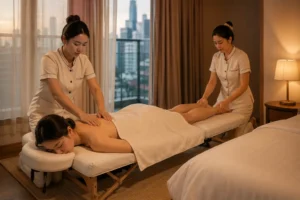
Outcall massage means the therapist comes to your location: hotel room, condo, or serviced apartment. You don't travel anywhere, and the therapist brings all the equipment, including the portable table or mat, fresh linens, oils, and towels. It's the most convenient option for visitors staying in central Bangkok. See our full in-room hotel massage guide.
14. How much space do I need in my room?
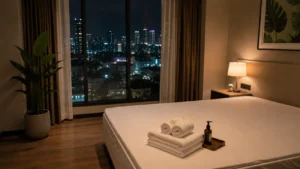
For a table setup, you'll need roughly 2m by 1.5m of clear floor space, and slightly less for a floor mat, about 2m by 1m. Most standard hotel rooms and studio condos work fine. If space is tight, mention it when booking. Our guide on table vs floor setup covers this in detail.
15. What should I tell the hotel front desk?
Simply tell them you're expecting a massage therapist at a set time, for example: "I have a massage therapist arriving at 8pm, room 1247. Please send them up when they arrive." Hotels in Bangkok handle this routinely. Our front desk script gives you the exact words for any situation.
16. What about condo security?
Most Bangkok condos require visitors to check in at reception. Give the therapist your building name, room number, and phone number when booking, and reception will call to confirm before sending them up. Some buildings ask you to pre-register visitors, so check your building's rules.
17. What does the therapist bring?
Professional outcall therapists arrive with everything: a portable table or floor mat, fresh linens, quality oils, towels, and any other supplies. You don't need to provide anything except the space and payment. It helps to have water ready for yourself afterward.
18. How long does setup take?
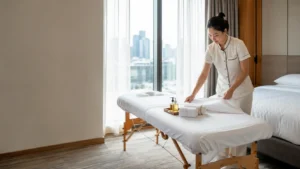
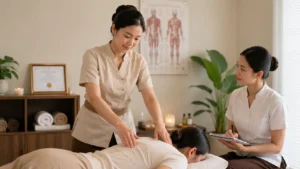
Setup is typically 5 to 10 minutes. The therapist unfolds the table or lays out the mat, applies fresh linens, and briefly checks your pressure preferences and any problem areas. Factor this into your timing: if you want a 90-minute massage finished by 10pm, book for around 8:15pm.
19. Which areas of Bangkok do outcall services cover?
Most cover central Bangkok: Sukhumvit (Asok, Thonglor, Ekkamai, Phrom Phong), Silom, Sathorn, Siam, Ratchada, and Riverside. Some reach outer areas with a travel fee. Divine Thai Spa operates across all the major central districts, listed on the service areas page.

Booking and timing
20. How far in advance should I book?
Same-day booking usually works with a few hours' notice. For evening sessions, the most popular time, booking earlier in the day is wise. If you want a specific therapist or a late-night slot, one to two days ahead is better. Peak times are 7 to 10pm.
21. Can I book a massage after midnight?
Yes, many outcall services run late, some until 2am or 3am, with a small late-night fee to cover the therapist's transport. If you're arriving on a late flight or prefer late sessions, see our guide on whether 24/7 massage is worth it.
22. What if I need to cancel?
Most services appreciate notice, ideally a few hours before. Cancelling at the last minute or no-showing affects the therapist's schedule and income, so communicate as early as you can. Policies vary, but courtesy goes a long way.
23. Can I request a specific therapist?
Yes, most established services accommodate requests when possible. If you had a great experience with someone, ask for them by name when rebooking. Availability depends on their schedule, so booking ahead improves your chances.
Pricing and tipping
24. What affects massage pricing?
Several things: session duration (60, 90, or 120 minutes), massage type, your location (outer areas may add a travel fee), and timing (late-night bookings often carry a surcharge). Specialised options like couples or four-hand massage also cost more. Our pricing explained guide breaks it all down.
25. Is tipping expected?
Tipping isn't mandatory but is appreciated for good service, typically in the region of 100 to 300 baht depending on the session and how satisfied you were. It's a direct way to recognise your therapist's skill. For more, see our tipping guide.
26. Should I pay in cash or card?
Most outcall services prefer cash, so having the exact amount ready avoids counting change at the end of a relaxing session. Some accept card or mobile payment, so confirm when booking if that matters to you.
Safety and legitimacy
27. How do I know if a massage service is legitimate?
Look for transparent pricing with no hidden fees, a professional website or booking system, clear communication, genuine reviews, and therapists who arrive looking professional with proper equipment. Avoid services with vague pricing, suggestive marketing, or pressure to upgrade once the session starts. Our guide to avoiding massage scams covers the warning signs.
28. Is outcall massage safe?
Yes, when booked through reputable providers. Professional services vet their therapists, maintain clear standards, and have straightforward policies. The therapist checks in at your hotel front desk or condo reception, which creates a record of the visit, and you're in your own space, which many people find more comfortable than an unfamiliar venue.
29. What should I do if something feels wrong?
Trust your instincts. If a service seems unprofessional during booking, don't proceed. If something feels off during a session, you can ask the therapist to stop or adjust at any time. Legitimate providers want you to be comfortable, and you're always in control.
Professional boundaries and comfort
30. What are the professional standards for draping?
Professional massage always includes proper draping. Only the area being worked on is exposed; the rest of your body stays covered with sheets or towels throughout the entire session. If draping is ever inadequate, you can request an adjustment immediately, and any legitimate therapist will comply without hesitation.
31. Can I end a session early if I'm uncomfortable?
Absolutely. You can end any session at any time, for any reason. If something doesn't feel right, whether the pressure, the technique, or the environment, simply say so. Professional therapists respect this without question, because your comfort is the priority.
32. How do legitimate services handle inappropriate requests?
They decline firmly and may end the session. Reputable providers have clear policies against anything outside the scope of professional therapeutic massage, and therapists are trained to establish boundaries. Such requests can result in the session ending without a refund.
33. Will I be asked to remove all my clothing?
For oil massage, you undress to your comfort level, many people keep underwear on, and you're draped throughout. For traditional Thai massage, you stay fully clothed in loose garments. You're never required to be completely undressed, and your preferences should always be respected.
34. What if I have concerns about privacy?
Your session details stay private. Professional services don't share client information, and the therapist's job is to provide treatment, not to make judgments. If you have specific concerns, whether about a medical condition, body image, or anything else, you can raise them before or during the session. Discretion is standard.
35. How should I communicate during the session?
Speak up about pressure, pace, and problem areas. Phrases like "lighter please," "that area is tender," or "more pressure is fine" are all the therapist needs. You don't have to talk throughout, since silence is perfectly normal, but if something needs adjusting, just say so. Good therapists welcome the feedback.
36. What's the best way to ensure a professional experience?
Book through an established, reputable service with clear branding and verifiable reviews. Avoid anonymous listings, unclear pricing, or anyone promising more than standard therapeutic massage. When in doubt, book with a known provider that specialises in professional outcall massage.
Ready to book your session?
Divine Thai Spa offers professional outcall massage across central Bangkok: traditional Thai, oil, deep tissue, and aromatherapy, delivered to your hotel or condo by trained therapists with all equipment included.
book a session