Sen lines are the network of energy channels that a traditional Thai massage works along. Instead of gliding over the muscles the way an oil massage does, a Thai therapist presses and stretches at points spread out across these lines, with the aim of releasing tension and letting energy move freely through the body.
The idea comes from traditional Thai medicine, and it is the reason a Thai massage feels so different from the styles most visitors know. This guide explains what the sen lines are, how many there are, which ones a therapist actually works on, and how the map compares with the energy systems used in other traditions.
- Sen lines are invisible energy channels that run through the body in Thai tradition.
- Traditional teaching describes 72,000 of them, with 10 principal lines called the Sip Sen.
- A therapist presses and stretches along these lines to clear what tradition calls blockages.
- The system is related in spirit to Chinese meridians and Indian nadis, but it is its own map.

- OriginTraditional Thai medicine
- Total channels72,000 (traditional teaching)
- Main lines10, called the Sip Sen
- How they are workedPressure and assisted stretching
What sen lines are
In traditional Thai medicine, life energy travels through the body along a web of channels called sen. The word is often translated as line or vessel. Health is understood as energy flowing smoothly through these channels, and discomfort is understood as energy that has become blocked or stuck somewhere along the way. A Thai massage is the hands-on method for finding those blocked spots and easing them open again.
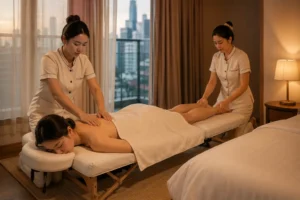
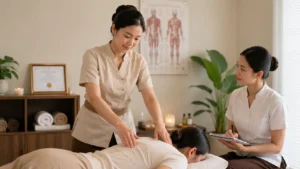
This is why a session looks the way it does. The therapist moves along the body in a deliberate sequence, resting a thumb, palm, elbow, or foot on specific points and holding steady pressure, then guiding you through assisted stretches. Each of those points sits somewhere on a sen line. You do not need to picture the map to feel the effect, but knowing it is there explains why the work feels methodical rather than random.
How many sen lines there are
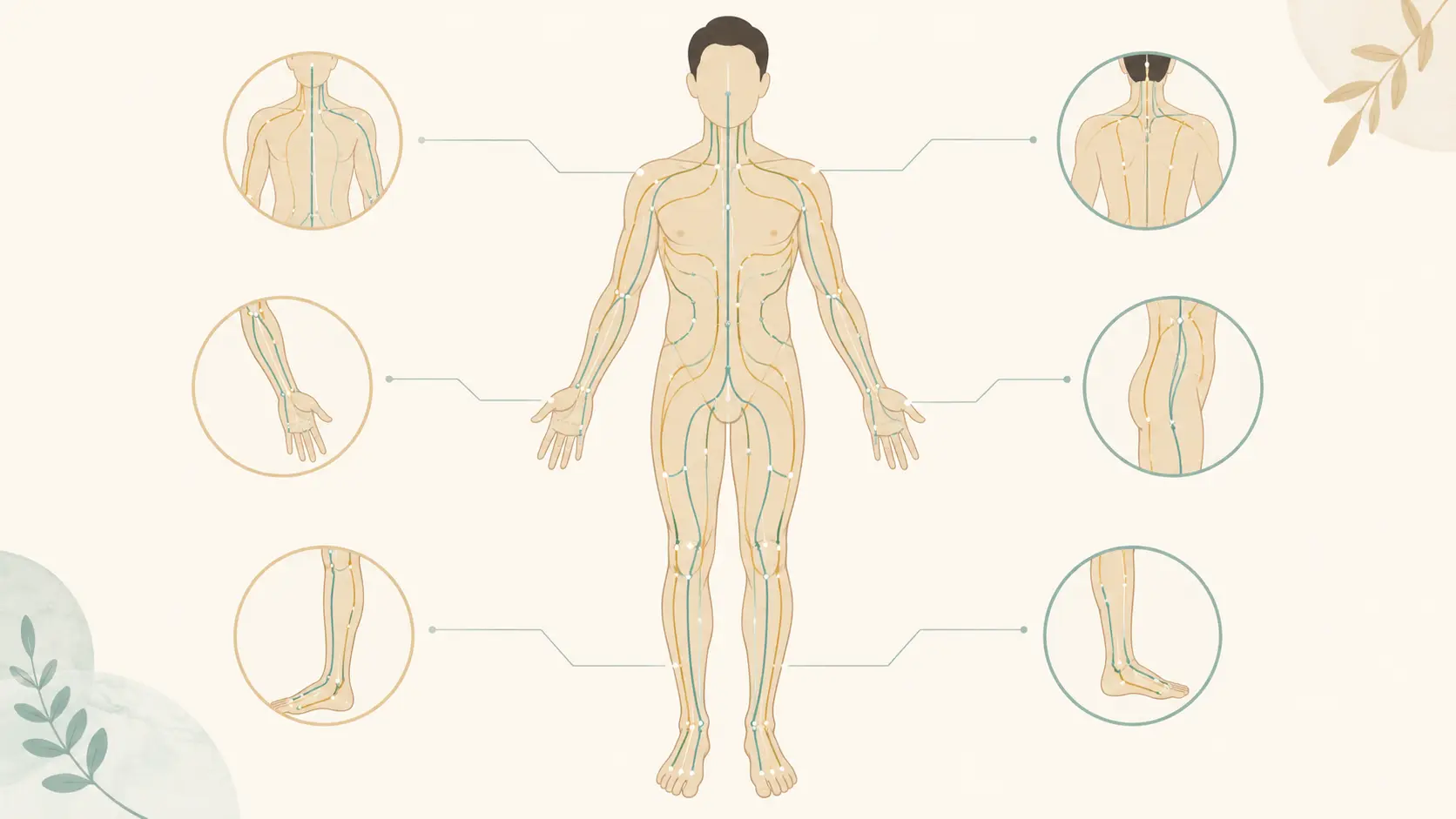
Traditional texts give a large and symbolic number. They describe 72,000 sen running through the body, a figure that appears across several Asian healing traditions to suggest a channel reaching every part of a person. No therapist works all of them. Out of that vast network, Thai tradition singles out 10 principal lines that carry the most importance in practice. These ten are known together as the Sip Sen, which simply means the ten lines in Thai.
Much of what is known about these lines in Thailand was gathered and preserved at Wat Pho, the temple in Bangkok famous as a teaching centre for traditional Thai medicine. Its inscriptions and diagrams of the body's energy pathways have helped keep the knowledge consistent across generations of practitioners.
The ten main lines: Sip Sen
The Sip Sen are the working map of Thai massage. Most of them are described as beginning near the navel and travelling out to the limbs, the head, or the sense organs. Transliterations of the names vary from one school to another, so you may see slightly different spellings, but the ten lines are widely listed as follows.
- Ittha and Pingkhala run either side of the spine and are among the most worked lines, linked to the back, neck, and head.
- Sumana runs up the centre of the body and is associated with the chest and throat.
- Kalathari spreads out to the arms and legs and is often linked to circulation and the limbs.
- Sahatsarangsi and Thawari travel down to the legs and are connected in tradition with the eyes.
- Lawusang and Ulangka are associated with the ears and hearing.
- Nanthakrawat and Khitchanna are linked with the lower abdomen and the body's internal functions.
You do not need to memorise the list. The useful takeaway is that the lines cover the whole body in a structured way, from the spine and limbs to the head and the senses, which is why a full Thai session moves through the legs, back, shoulders, arms, and neck in order rather than treating one sore spot in isolation.
How a therapist works the sen lines
A trained Thai therapist follows the lines with a rhythm of press, hold, release, and stretch. Steady pressure is applied along a line using thumbs, palms, forearms, elbows, knees, or feet, depending on the part of the body and the depth needed. The therapist pauses on tighter points, holds them for a few breaths, and then moves on. Assisted stretches open the joints and lengthen the muscle around the line so the pressure work lasts.
None of this uses oil, and you stay fully clothed in loose clothing on a firm mat. That is the traditional format, and it is what makes the line work possible, since the therapist needs to feel the body and move you through positions. If you want the full background on the practice these lines belong to, our guide on what Nuad Thai is covers its history and its UNESCO heritage listing.
Pressure along a sen line should feel firm and satisfying, sometimes tender on a tight spot, but never sharp or painful. A good therapist adjusts to your comfort, so say something the moment a point feels too strong.
Sen lines vs meridians vs nerves
People often ask whether sen lines are the same as the meridians used in Chinese medicine or the nerves described in Western anatomy. They are related in idea but not identical, and it helps to see them side by side.
Thai sen lines
- From traditional Thai medicine
- 72,000 channels, 10 main Sip Sen
- Worked with pressure and stretching
- Fully clothed, on a mat
Chinese meridians
- From traditional Chinese medicine
- 12 main meridians plus vessels
- Worked with acupuncture and acupressure
- Linked to specific organs
Western nerves
- From modern anatomy
- Mapped physical pathways
- Carry signals, not energy
- Seen on a scan
The honest position is that sen lines are a traditional framework rather than a structure you can point to on a medical scan. They share the family idea of energy channels with the Indian nadis and the Chinese meridians, but the Thai map, its names, and the way it is worked are distinct. What matters for most people is that the framework guides skilled, methodical touch, and the physical result is real whatever language you use for it. Our piece on touch as medicine looks at why that hands-on work has an effect.
What working the sen lines is good for
Because the lines cover the whole body, working them tends to leave people feeling looser and calmer all over rather than just in one area. The pressure eases muscle tightness along the back and limbs, the assisted stretches improve the sense of flexibility and range of motion, and the slow rhythm of the session settles the nervous system. Many people describe the feeling afterwards as lighter and more balanced.
Thai massage is a wellness practice, not a medical treatment. If you have an injury, a health condition, or any doubt, check with your doctor first and tell your therapist before the session begins. If you are weighing the clothed, line-based Thai style against a gentler oil session, our comparison of Thai massage versus oil massage lays out the difference.
Trying traditional line work in Bangkok
You can experience sen line work without leaving your room. A qualified therapist can bring a mat to your hotel or condo, set up in a few minutes, and give you a full clothed session in the traditional style. Ask for traditional Thai massage in Bangkok when you book. New to it and have questions first? Our Thai massage FAQ answers the common ones.
book a massageFrequently asked questions
What are sen lines in Thai massage?
Sen lines are the energy channels that traditional Thai medicine describes running through the body. A Thai therapist presses and stretches along these lines to release tension and, in traditional terms, to clear blocked energy.
How many sen lines are there?
Traditional teaching describes 72,000 sen in total. Out of these, Thai practice focuses on 10 principal lines known together as the Sip Sen, which means the ten lines.
Are sen lines the same as Chinese meridians?
They share the same broad idea of energy channels, but they are separate systems. Thai sen lines come from traditional Thai medicine and are worked with pressure and stretching, while Chinese meridians come from Chinese medicine and are linked to acupuncture points and specific organs.
Which sen lines does a Thai massage focus on?
The two lines either side of the spine, Ittha and Pingkhala, are among the most worked because they connect to the back, neck, and head. In practice a full session moves along several of the Sip Sen so the whole body is covered.
Do you have to believe in sen lines for Thai massage to work?
No. Sen lines are a traditional framework that guides where and how the therapist works. Whether or not you follow the theory, the physical effect of the pressure and stretching on tight muscles and stiff joints is the same.